When Fragments became Wearable Canvases

When Fragments became Wearable Canvases
Some pieces were never meant to be garments.
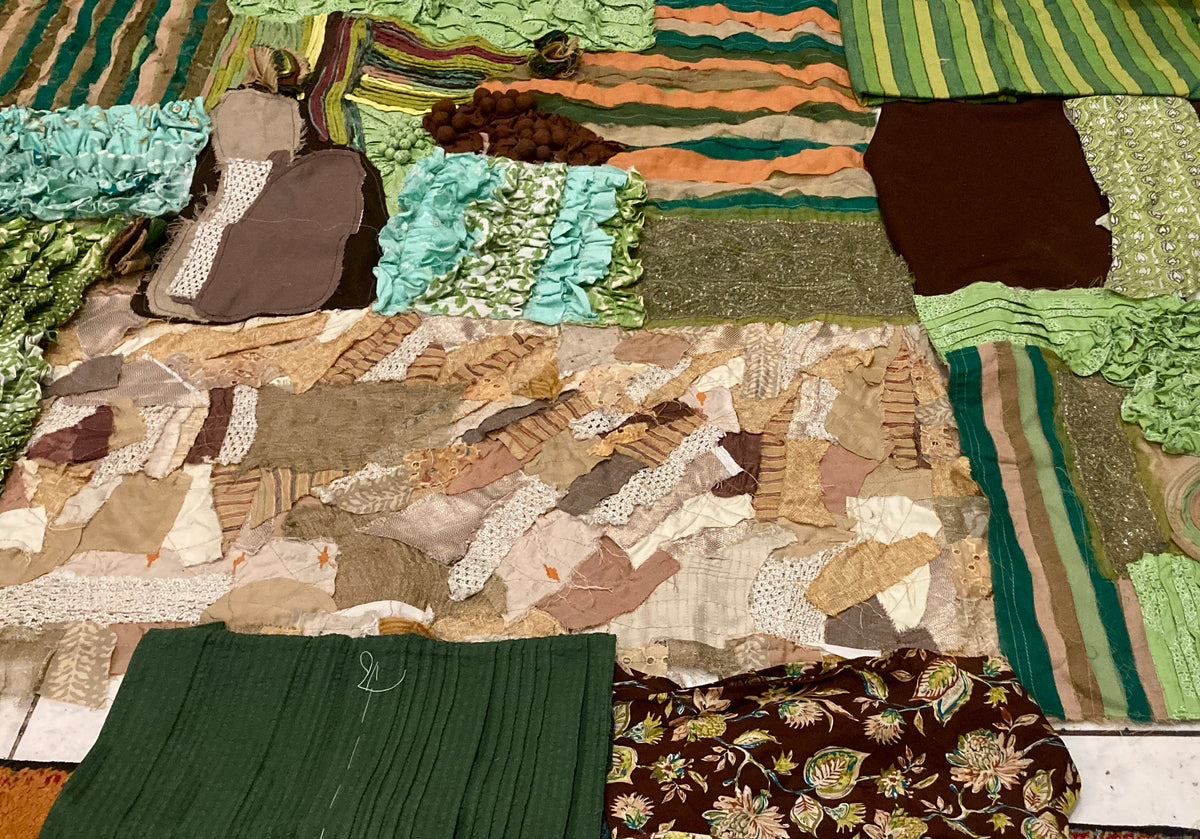
They began as surfaces, like canvases stretched out on the studio table. There was no intention of wearability in the beginning. No fixed silhouette, no clear outcome. Just some leftovers, time, and an urge to build something slowly.
Terraforma, Paradiso, and Grassland Escape came out of this space.
Each one started with a reference to nature: landscapes, natural textures that we find around us: A rose, a landscape, a field. Not in how they look, but in how they grow. Uneven, layered, unpredictable. There is no straight line in nature, no repetition that is exact. That became the starting point.
We began by working on the surface itself. Fabric was manipulated, gathered, pleated, layered. Pieces were added, removed, reworked. Techniques like appliqué and handwork were not used as decoration, but as a way to build the form. Almost like painting, but with cloth.
There was no garment in mind yet.
Over time, these surfaces started holding weight, visually and physically. They began to suggest direction. A fall here, a structure there. The transition from canvas to garment happened gradually, almost unintentionally. The silhouette was not designed first, but it emerged from what the material was already becoming.
That’s how these pieces turned into wearable forms.

Paradiso grew from the idea of a rose: not its symmetry, but its unfolding. Layers building over time.